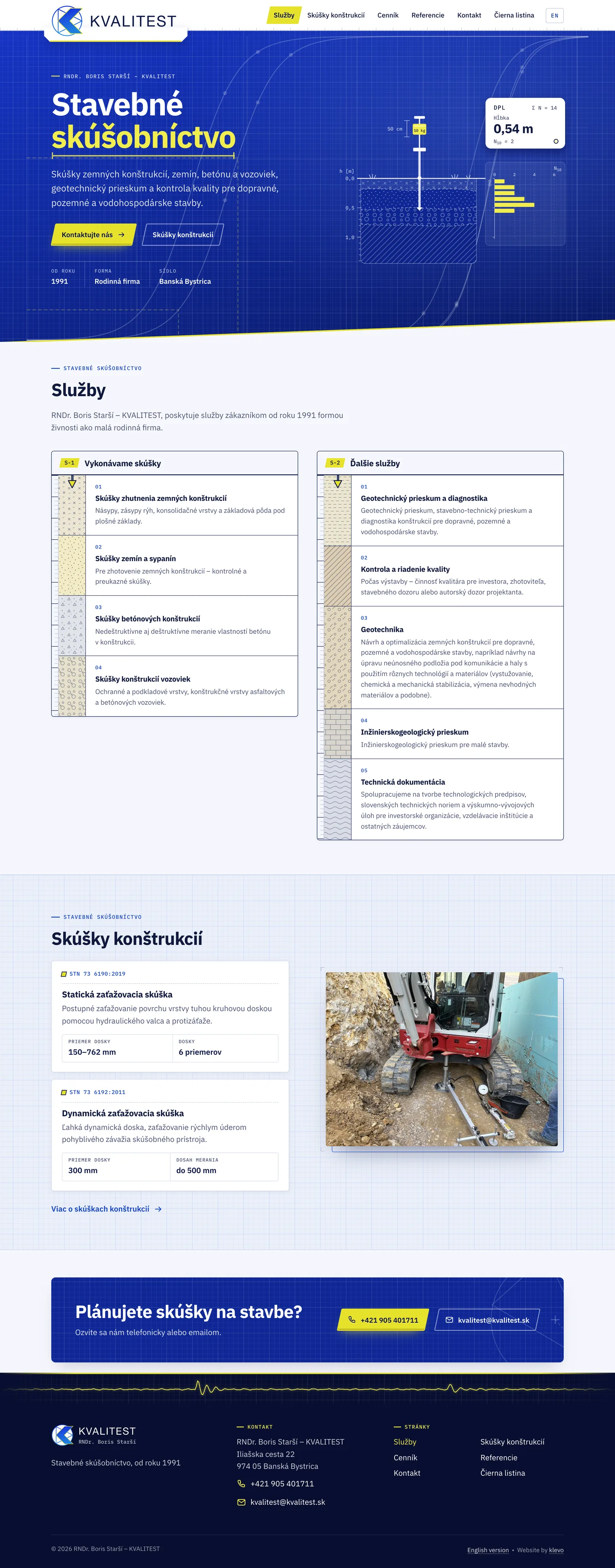
Kvalitest is a small family business from central Slovakia that has been testing construction work since 1991. It checks the compaction of embankments, trench backfills and road layers, tests soils, concrete and pavements, runs geotechnical surveys and supervises quality on site. In October 2026 I launched a complete redesign of its website, a static Jekyll site that looks like an engineering drawing and animates the tests the company does every day.
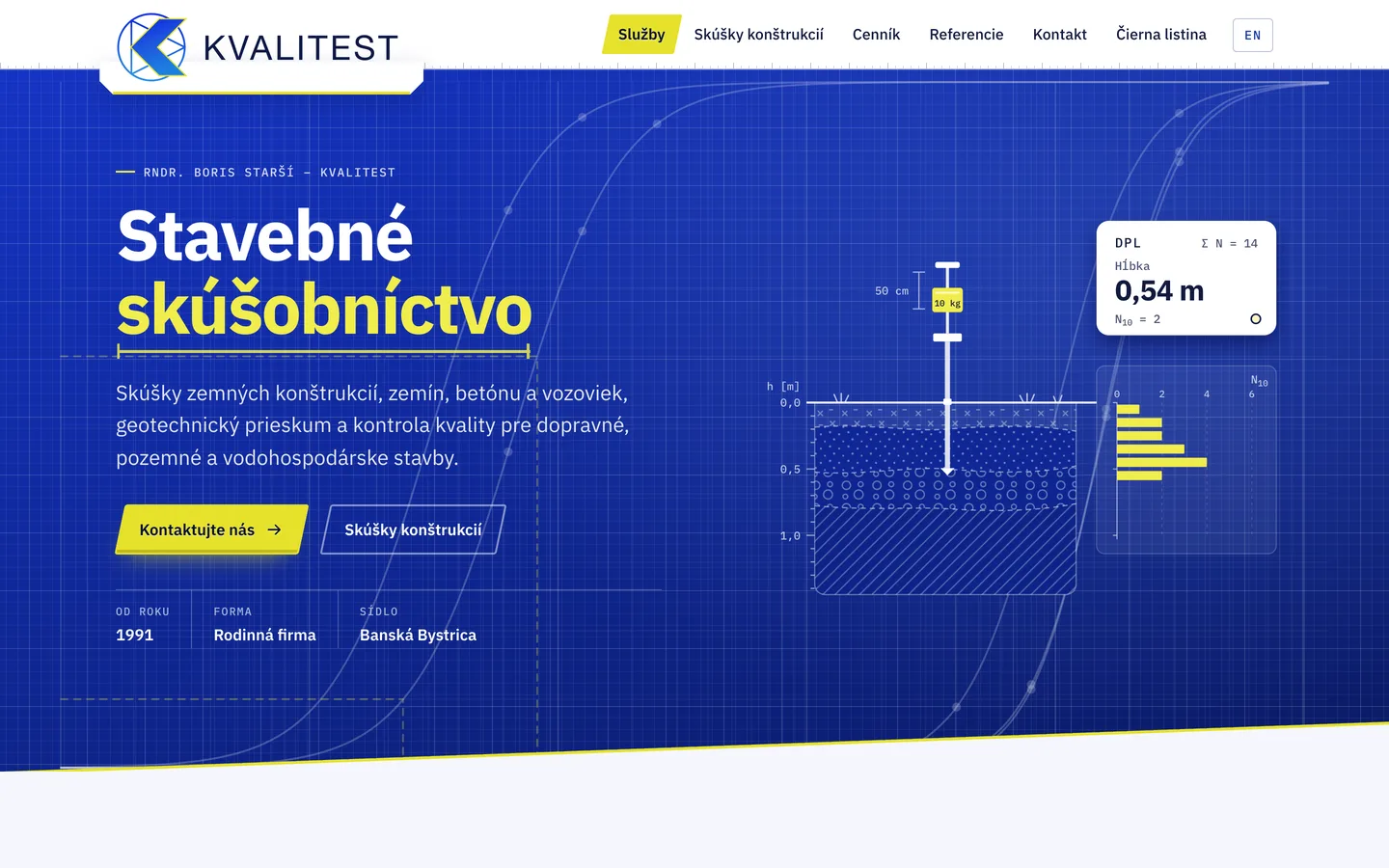
Before and after
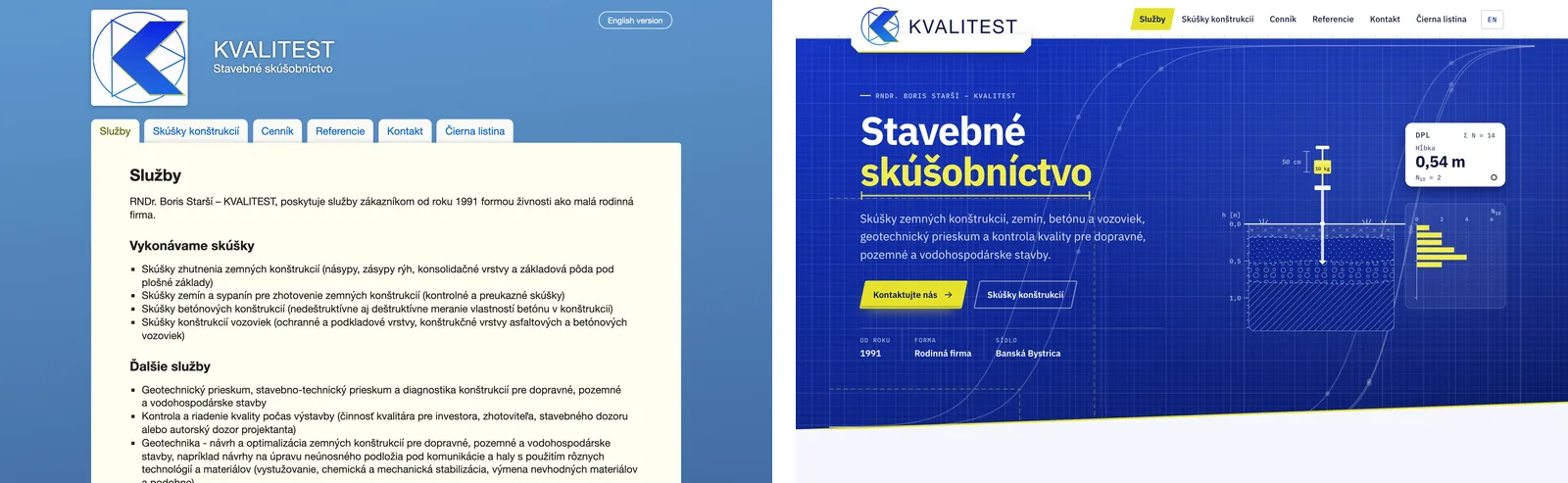
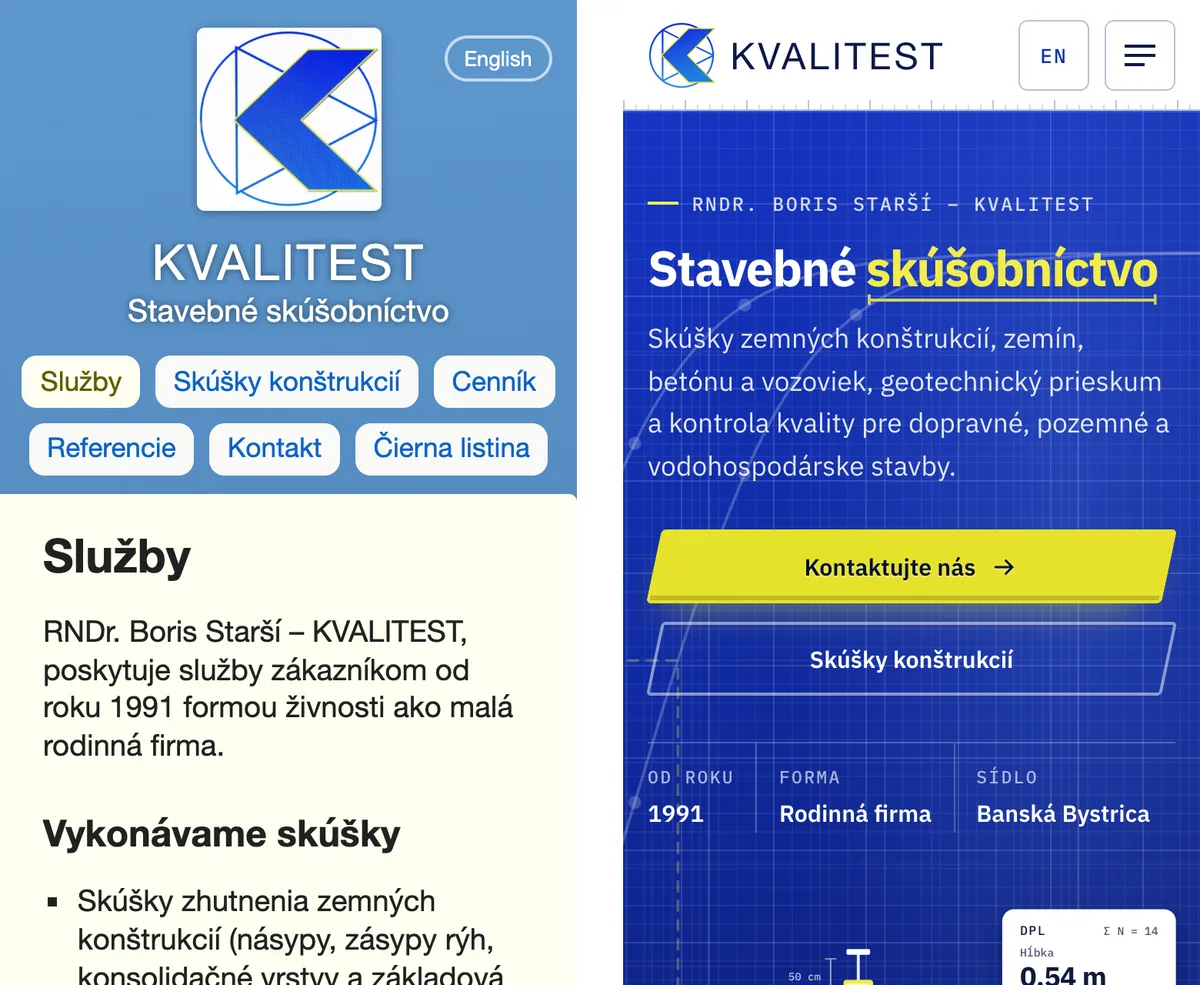
The original site was a small PHP site. In April 2025 I moved its content to Jekyll and static hosting and kept its familiar look: a blue page, tabbed navigation and a cream content sheet. This year it got a new face, designed alongside the Calibrium.sk redesign. The two sites have shared a code base since the move to Jekyll, so they share much of the plumbing, but each has a visual identity of its own.
A blueprint in the colours of the logo
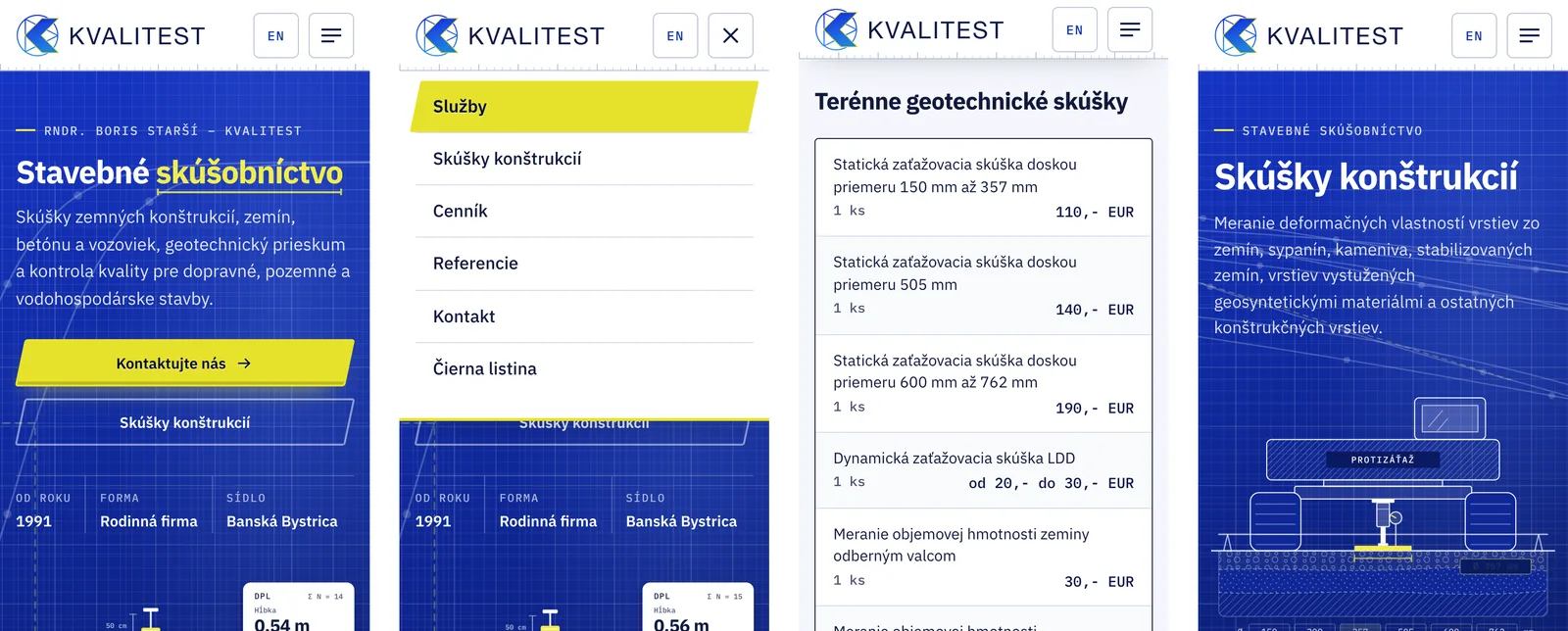
The Kvalitest logo is a blue K in a circle, shaded from deep ultramarine at the top to azure at the bottom and outlined in lemon yellow. The blues became the blueprint heroes, drawn on millimetre paper with a fine grid and a stronger line every five cells. The lemon yellow is the single accent: the primary button, the second word of the homepage title with a dimension line under it and the current navigation item. Highlights and button faces lean at the angle of the arms of the K, and every hero ends in a slanted edge outlined in yellow.
Text is set in IBM Plex Sans, with IBM Plex Mono for labels, standard numbers and instrument readouts, as you would find them on a drawing or a lab report. The wordmark keeps the lettering of the original site and the emblem is redrawn as an SVG.
A lab chart behind every hero
Each page plots a geotechnical lab chart of its own across its hero: grain size distribution curves from a sieve analysis, Proctor compaction curves with their optimums, load-settlement curves of static plate load tests or the blow counts of light dynamic penetration logs. A short Ruby script draws them from a kind and a seed, so the same page always gets the same chart, and the curves draw themselves in as the page opens.
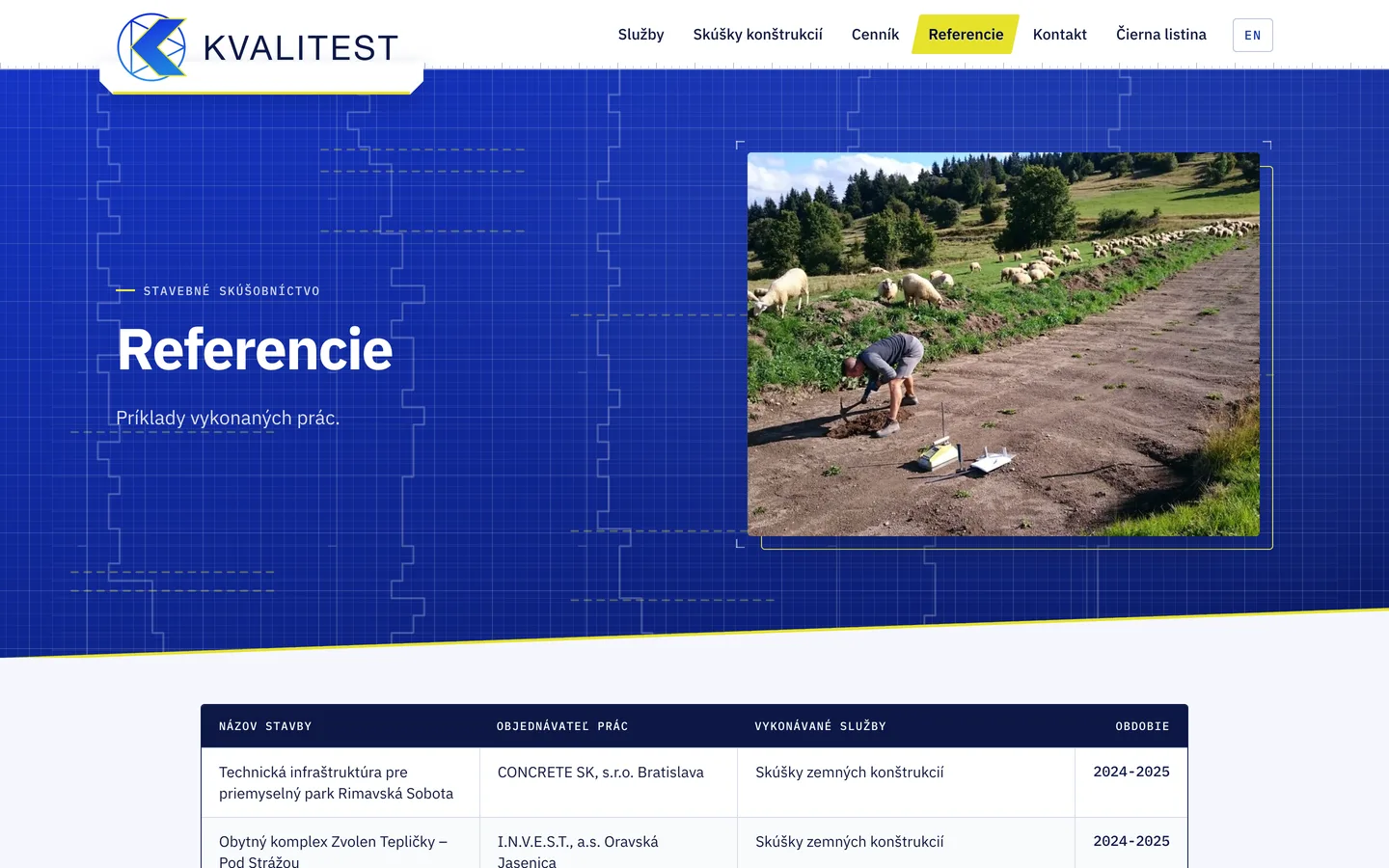
Animated tests
The homepage hero shows a light dynamic penetration test. A 10 kg hammer falls 50 cm onto the anvil and drives the rods into the ground layer by layer. Beside it the log of blows per 10 cm (N10) grows bar by bar and a readout card shows the depth reached and the total blow count. The hammer is timed by CSS keyframes that Sass generates from the blow counts, and the readout reads the animation’s own clock through the Web Animations API to count the blows struck so far, so the numbers never drift from the drawing.
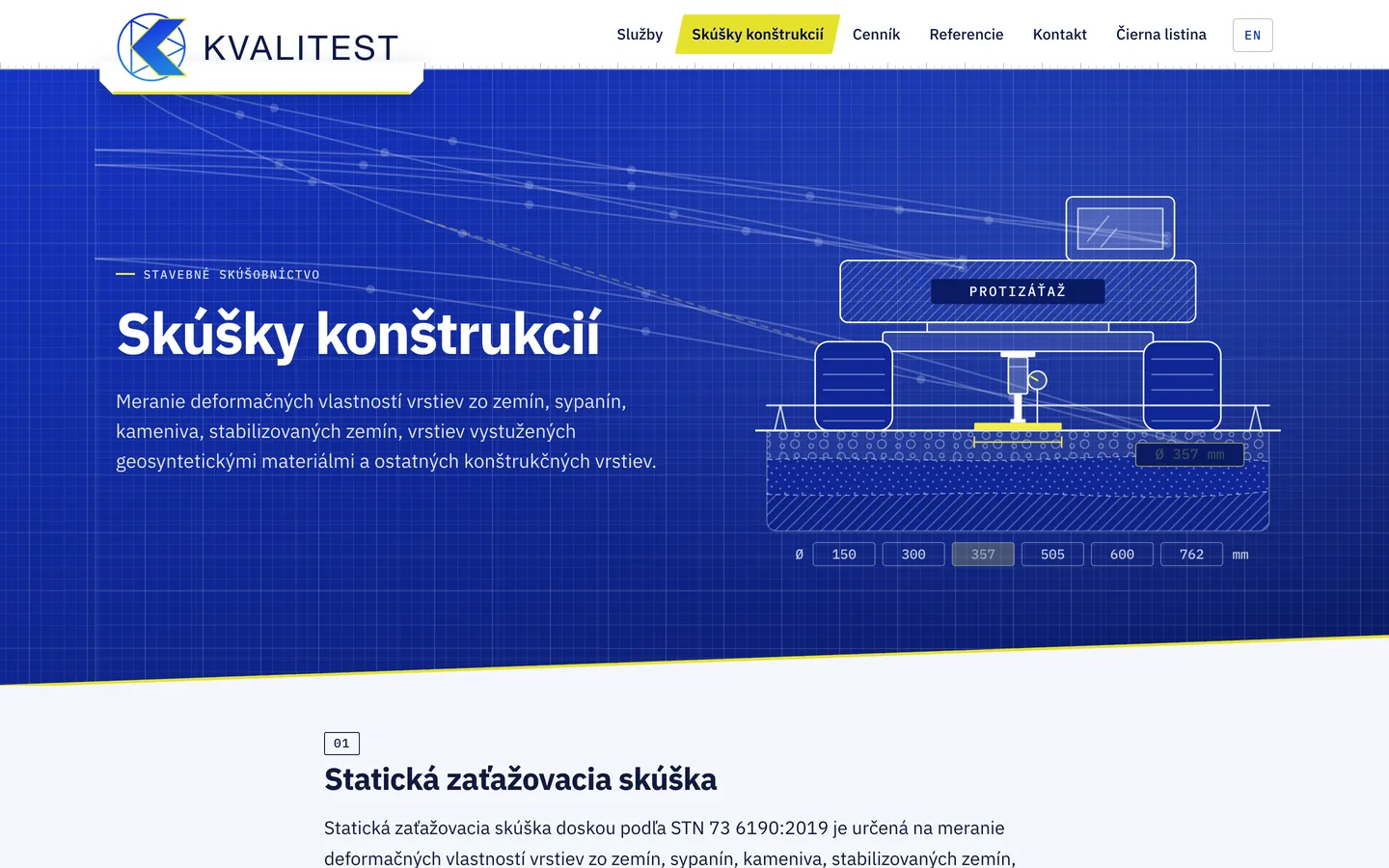
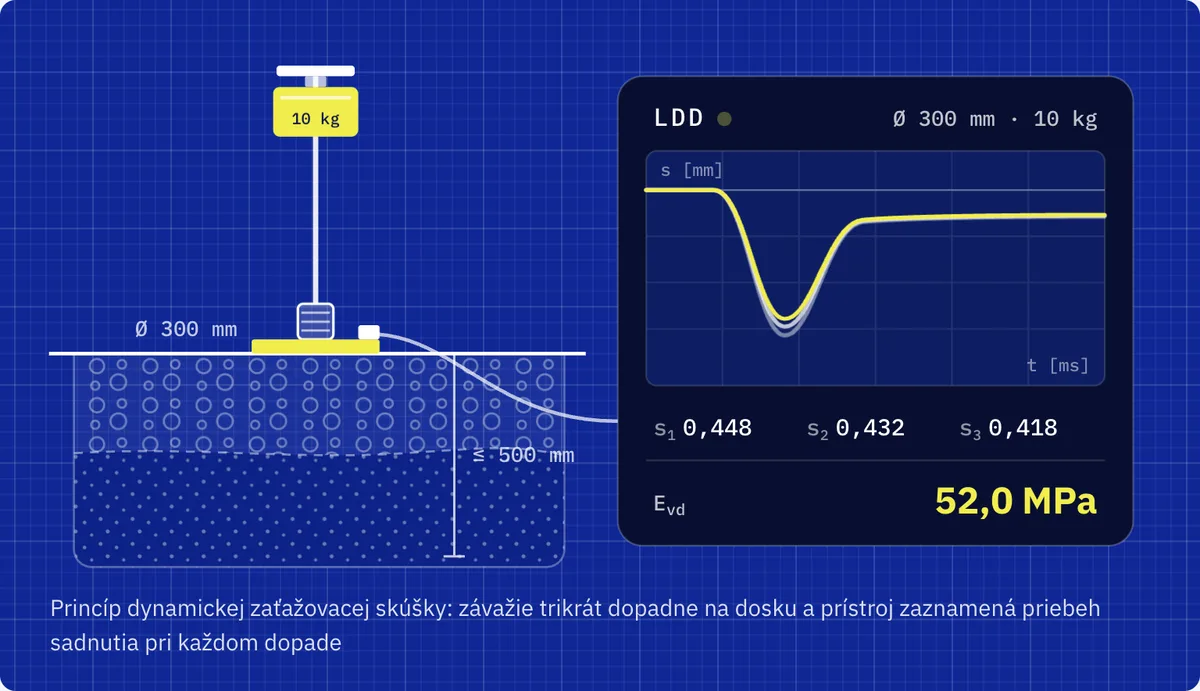
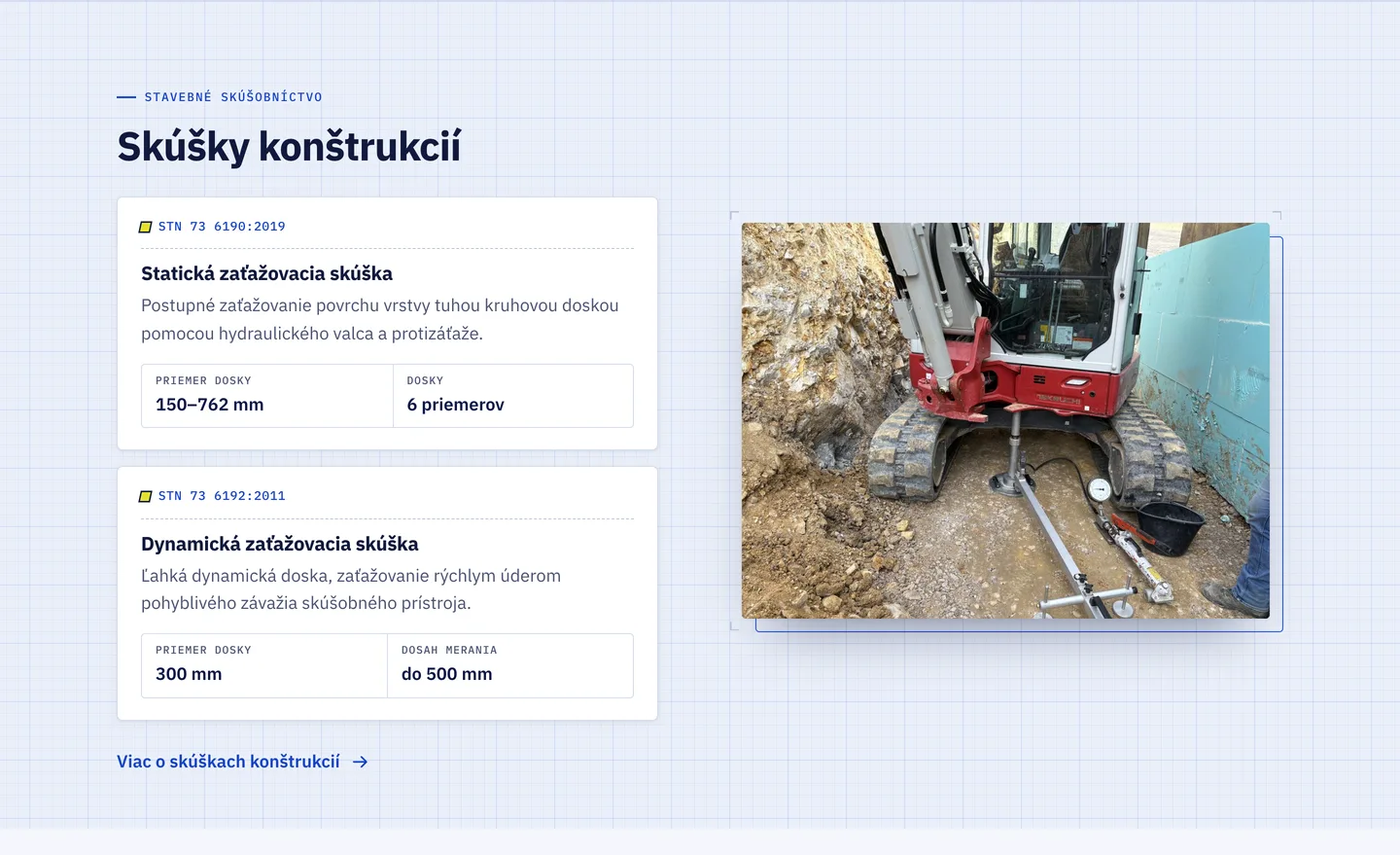
The structural testing page has two more drawings. Its hero shows the static plate load test with a machine as the counterweight, stepping through all six plate diameters the company uses, from 150 mm to 762 mm, and how deep each one reaches. Further down the article a light dynamic plate drops its weight three times while a device display draws the settlement curve of every drop and works out Evd from the three readings with the formula the real instrument uses. The readings change every round and shrink a little from drop to drop, as the layer compacts under the plate. A seismograph trace scrolls along the top of the footer on every page.
All of it is SVG with CSS keyframes. An IntersectionObserver pauses the drawings while they are off screen and they stay still for visitors who prefer reduced motion.
Services as borehole logs
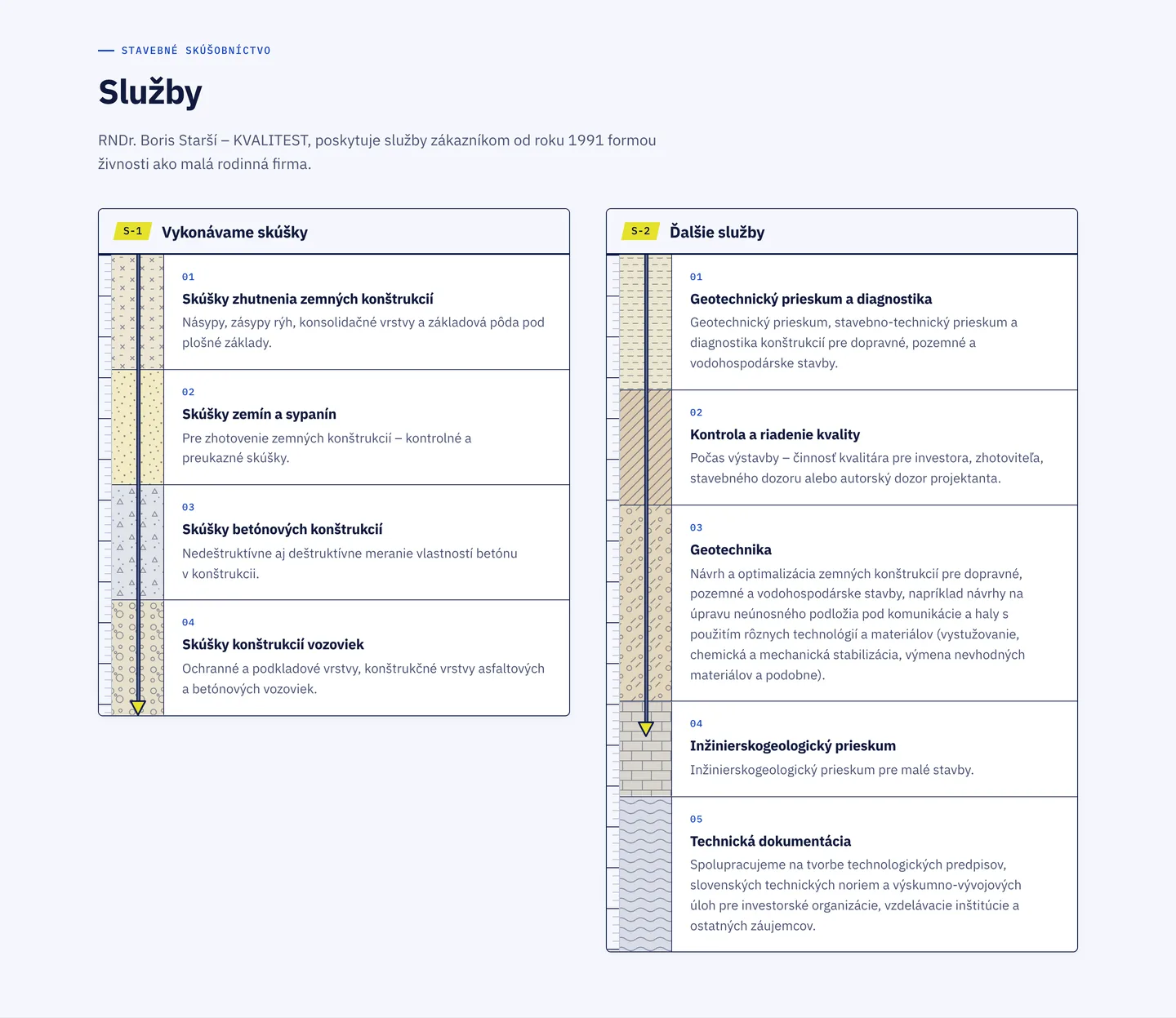
The homepage lists nine services in two groups. Instead of cards they became two borehole logs, the kind of column drawing that records the layers found in a borehole. Each service is a layer with its own soil hatching, from fill and sand to clay, rock and schist, with depth ticks along the side. As you scroll, a penetrometer cone stays in the middle of the screen and sinks through the layers one by one.
Details that matter for a small business site
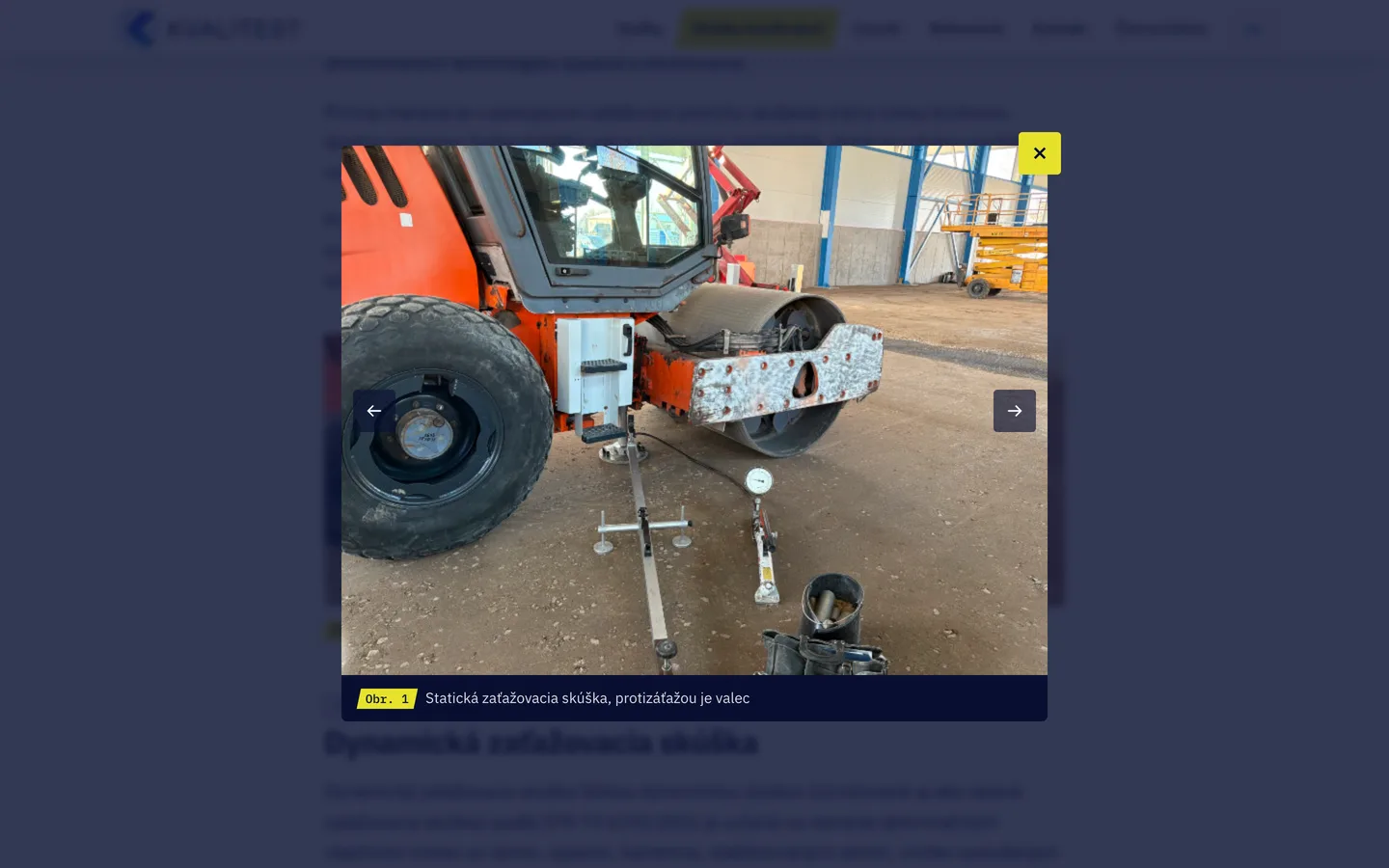
- Photo lightbox. Site photos open in a native
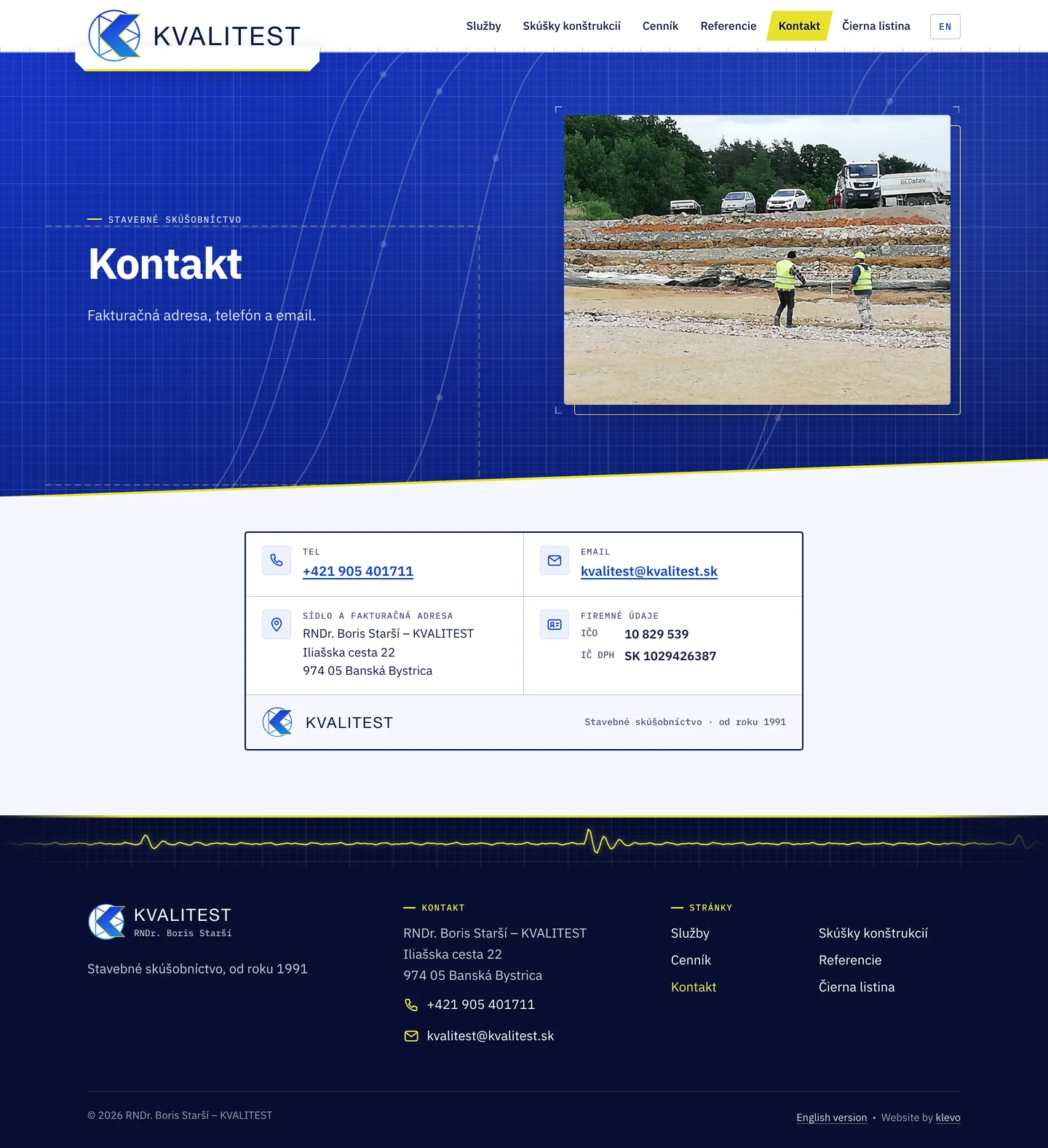
dialogwith previous and next navigation and a legend built from the figure caption. A figure of several photos numbers them in turn, and references like “(obr. 5)” in the text open the matching photo directly. - Contact as a title block. The contact details are laid out like the title block in the corner of a technical drawing.
- Warning tape. Each entry on the list of companies that did not pay their bills sits behind a strip of yellow and black warning tape.
- Tables on phones. Under 720px each row of the price list and the references table stacks into its fields, instead of squeezing four columns onto a narrow screen.
- Typography that holds together. A Jekyll build plugin turns the spaces inside “150 mm”, “STN 73 6190”, “obr. 5”, the postal code and the company IDs into non-breaking spaces, so they never break across lines.
- Folding header. The logo hangs below the bar on a plate at the top of the page and folds into a slimmer bar as soon as you scroll.
- Two languages. Slovak and English share layouts, data files and translations. Every page links its counterpart with
hreflang, names a canonical URL and appears in a sitemap with its language alternates. - Self-hosted fonts. IBM Plex Sans and Mono in Latin and Latin Extended subsets, no third party requests.
- Contact details are base64 encoded in the config and decoded in the browser, which keeps them away from simple scrapers.
Build and deployment
The site is Jekyll with Sass, a handful of Liquid includes, under 200 lines of vanilla JavaScript and a small Ruby script for the hero charts. There is no framework and no build pipeline beyond jekyll build. The redesign touched 72 files and added around 5 000 lines.
Like Calibrium.sk, this was an AI accelerated build. I directed the design, made the calls on layout, palette and interaction and reviewed every change, while Claude Opus 5.5 in Claude Code did much of the heavy lifting in Sass, SVG and JavaScript. The penetration test timed to its own readout, the chart generator and the borehole logs would each have taken days by hand.
The site runs on an old-skool shared hosting platform, so production deploys over SFTP with a script that mirrors the built site using lftp and pulls the password from the 1Password CLI, with a dry run mode that previews uploads and deletions first. For review there is a one command preview deploy to a Cloudflare Worker on a subdomain of this site.